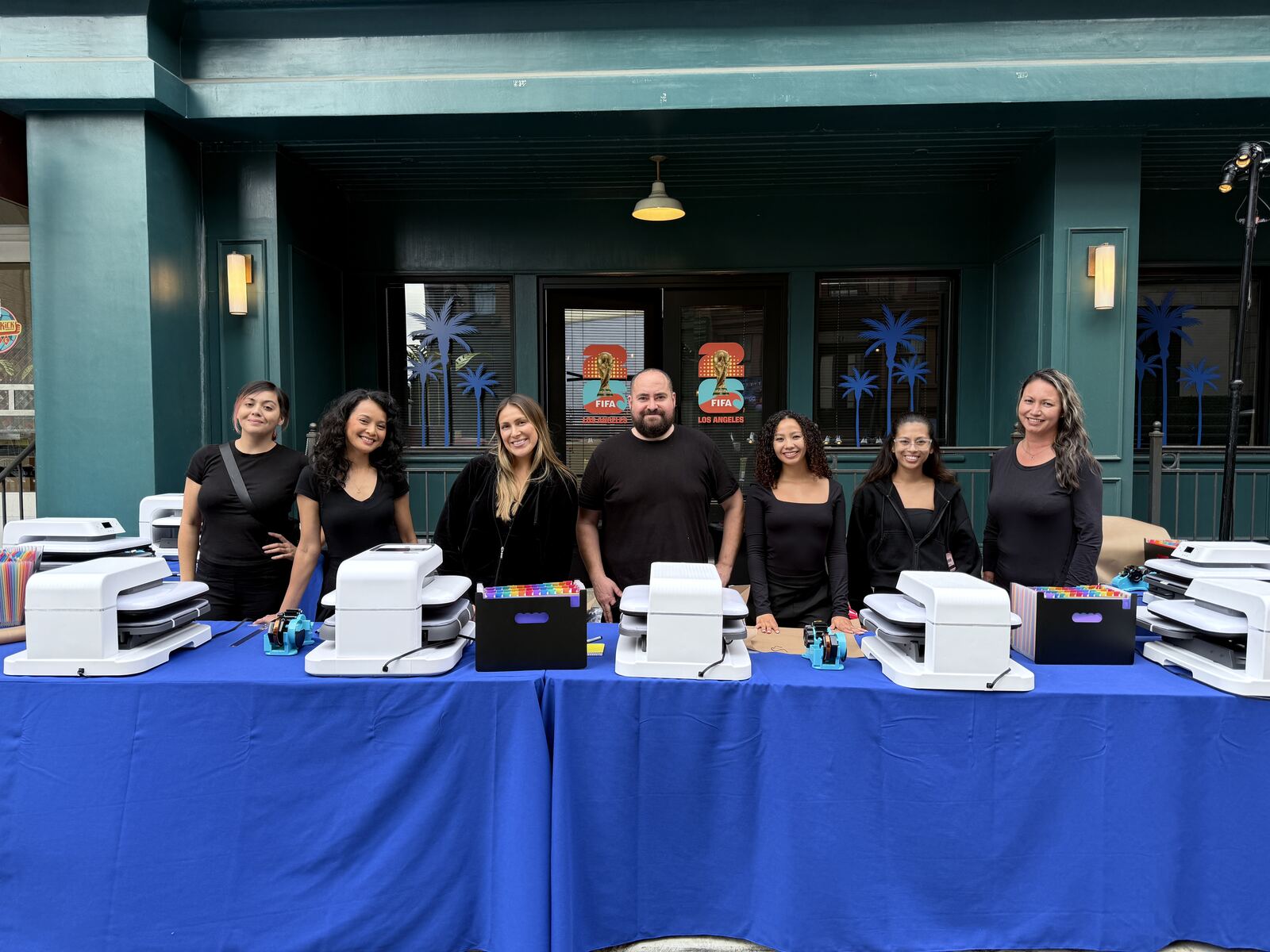
Published 2026-07-01 by the Merch Troop crew
What good looks like at twenty washes
Nobody complains about a live print at the event. The complaints, when they come, arrive about five weeks later, when someone has run the shirt through the wash a few times and the logo edge has started to curl. That is the real test of an on-site station, and it is a test you can pass deliberately.
What follows is how we think about DTF print durability and wash testing for event merch: what a good transfer should survive, which application shortcuts cause the failures, and how to run a wash test that actually predicts something.
A correctly applied direct-to-film transfer, on cotton or a cotton-rich blend, should come through twenty to thirty domestic wash cycles with no cracking across the print body and no lifting at the edges. Some softening of the hand is normal and even desirable — the print relaxes into the fabric. Colour should stay put; slight loss of gloss is expected.
Worth calibrating expectations: a home wash cycle is roughly equivalent to three to five wears in terms of wear on the print. Twenty washes is a garment that has been genuinely lived in for a year or two. That is a reasonable bar for event merch and it is well within what the process can do.
When prints fail early, the film is rarely at fault. The application is. Three variables do essentially all the work: temperature, dwell time and pressure. Get any one of them meaningfully wrong and you have built a countdown timer into the garment.
The step rushed stations drop
Here is the specific failure we see most often, and it is entirely avoidable. After the transfer is applied and the carrier film is peeled, the print needs a short follow-up press under parchment or a cover sheet. That second press is what melts the print surface down into the fibers and seals the perimeter.
It adds a handful of seconds per piece. Which is exactly why a station under queue pressure quietly stops doing it, and why the shirts from the busiest hour of your event are the ones that fail first. If you are evaluating a vendor, ask them directly whether they second-press every piece when the line is thirty deep. The answer tells you a great deal.
The other application variables to watch:
- Pressure. Under-pressed prints lift at the edges within a handful of washes. Presses drift out of calibration; they need checking, not assuming.
- Peel timing. Hot-peel and cold-peel films are not interchangeable. Peeling a cold-peel film while it is still hot drags the adhesive layer and thins the print, which reads fine at the event and cracks later.
- Pre-press. Two to five seconds on the blank before the transfer drives out moisture and flattens the knit. Moisture under a transfer is a bubble, and a bubble is a failure point.
Run a wash test that tells you something
Vendor claims are not a test. Here is a protocol you can run in a week and actually learn from.
- Press six pieces on the exact garment SKU and colour you are ordering, from the same lot if possible, using the settings and the transfer that will be used on the day.
- Keep one untouched as a visual reference. Photograph it in daylight next to a ruler.
- Wash the rest inside out, cold, gentle detergent, no fabric softener, tumble dry low.
- Inspect at one, five, ten and twenty cycles. Score four things every time: edge lift, cracking across the print body, colour shift, and hand feel.
- Separately, hang one pressed piece in a hot car for seventy-two hours. That checks dye migration, which is a durability problem that shows up as the print changing colour rather than falling off.
If edges lift at cycle five, add pressure and verify the second press. If the body cracks by cycle ten, the print is likely over-cured or the garment is wrong for the method. If colour shifts, you have a polyester migration issue and need a low-bleed blank or a blocking layer.
Half the durability problem is the blank
Cotton and 50-50 blends are the reliable ground. Beyond that it gets interesting. Tri-blends with a high rayon content can bubble under standard settings and want lower temperatures. Ribbed, waffle and heavily textured knits give the adhesive less flat surface to bond to, so the print sits on the peaks and lets go in the valleys. Fleece and hoodies need a firm pre-press to flatten the pile before the transfer goes down.
And here is the honest limit: for a garment that will be worn three times a week for a year and washed hot because that is what people do, screen printing with a proper cure or embroidery will outlast a transfer. DTF earns its place on full colour artwork, small runs, and the ability to make it in front of a guest — not on maximum lifespan. Our post on garments for live DTF printing gets into blank selection, and what to expect from a mobile rig covers the equipment side.
Tell guests how to wash it
The cheapest durability upgrade available is a hangtag. Five lines: inside out, cold water, gentle detergent, no fabric softener, tumble low or hang dry, never iron the print directly. Fabric softener in particular coats fibers and undermines adhesion at the edges over time, and almost nobody knows that.
Add it to the blank order or print a small card at the hand-off table. It costs pennies, it makes the merch feel considered, and it materially changes what your shirts look like at the same event next year.
Frequently asked questions
How many washes should a DTF print survive?
A properly applied transfer on a suitable cotton or cotton-blend garment should come through twenty to thirty home washes with no cracking and no edge lift. If a print fails before wash five, the cause is almost always application rather than the film itself, usually a missed second press or insufficient pressure.
What is the single most common cause of DTF failure?
Skipping the second press after peeling. That short follow-up press is what melts the print surface into the fibers and seals the edges. It adds only a few seconds per piece, so it is the first thing a rushed station drops, and the damage shows up around wash five rather than at the event.
How should guests wash event merch to make it last?
Inside out, cold water, gentle detergent, no fabric softener, tumble dry low or hang dry, and never iron directly over the print. Printing those five instructions on a hangtag measurably improves how the garments look a year later, and it costs almost nothing to add to the order.
Ask us to press your blank before you commit
Send the garment you are considering and we will press a test piece so you can wash it yourself before ordering hundreds. See what the on-site rigs cover or tell us about your event. You can also reach the crew at (562) 614-4800.